

One UI vs iOS Camera: Why More Features Don’t Always Mean Better Photos

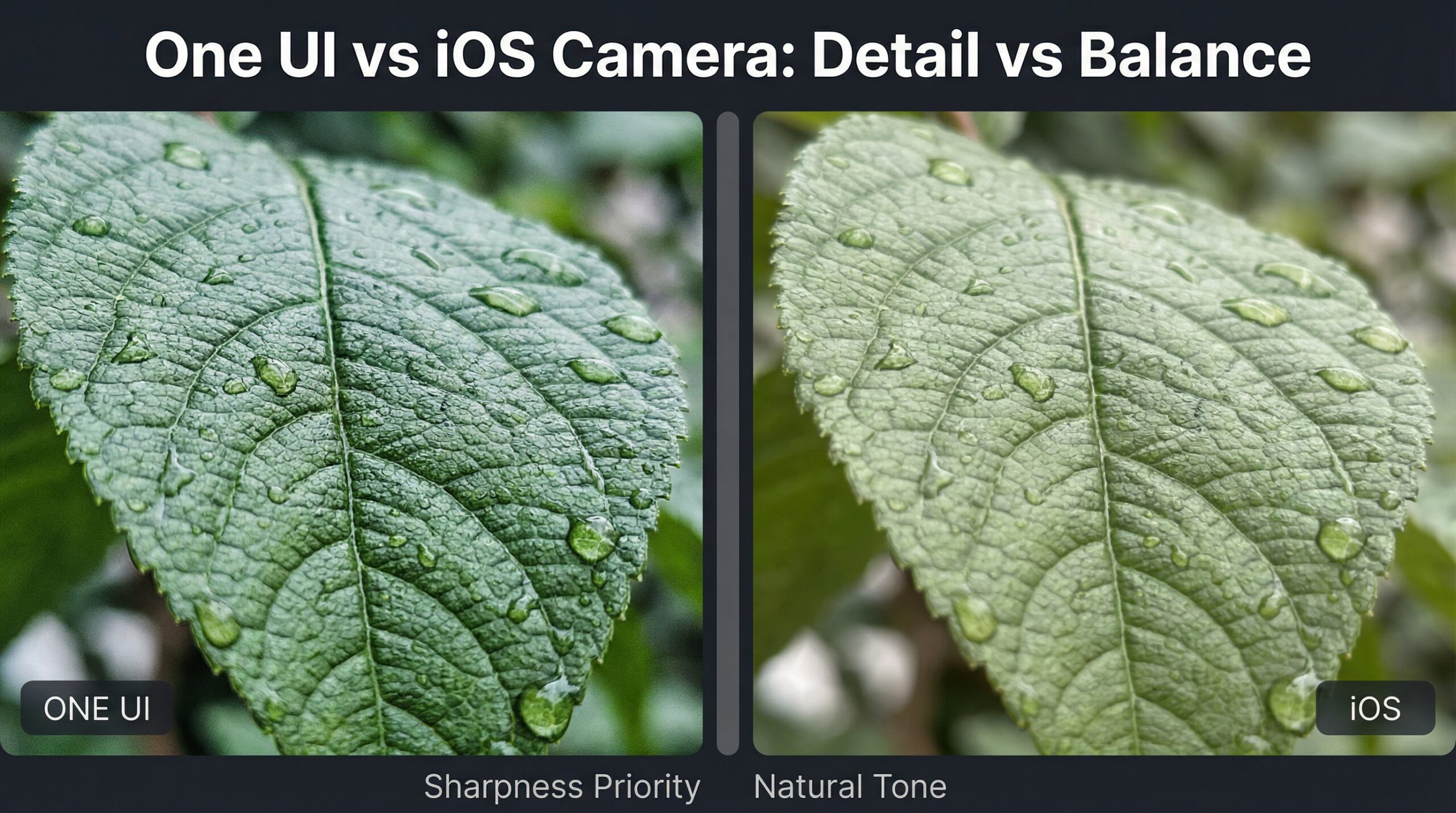
Introduction: It’s Not Just Camera Specs Anymore
When people compare smartphone cameras, they often focus on megapixels, like a 200MP camera phone versus Apple’s more conservative hardware. But that assumption misses something critical.
The real difference between One UI and iOS isn’t just hardware—it’s philosophy.
One prioritises control and flexibility.
The other prioritises consistency and simplicity.
And that fundamentally changes how you use your camera.
One UI: Feature-Rich, Control-Heavy Camera Experience
Samsung’s One UI (built on the Android operating system) takes a “more is better” approach, catering to users who want granular control over their hardware.
Key Characteristics
- Advanced manual controls (ISO, shutter speed, focus)
- Built-in modes like Pro Video, Single Take, and Director’s View
- Deep integration with tools like Google Camera Lens
- Compatibility with third-party tools like call recorder apps and applock app
More features = better photos. This philosophy implies that providing every possible professional tool empowers the user to achieve the best results.
In practice, a higher volume of features often results in:
- Steeper learning curve for the average user
- Inconsistent results for casual "point-and-shoot" scenarios
- Feature overload (many users never touch Pro mode)
iOS: Simplicity, Automation, and Consistency
Apple takes the opposite approach. Instead of giving you control, iOS removes decisions, relying on sophisticated algorithms to deliver a high-quality result every time you press the shutter.
- Minimal manual settings
- Strong computational photography (Smart HDR, Deep Fusion)
- Tight integration with control centre iphone and record screen iphone
- Built-in iphone translate app and iphone scan app
Less control = worse performance. Critics often argue that without manual overrides, the camera cannot reach its full professional potential.
Reality Check
Apple prioritizes the user experience by optimizing for:
- Point-and-shoot consistency: Ensuring the first photo is the right photo.
- Predictable results: Maintaining a uniform "look" across all users and lighting conditions.
- Seamless ecosystem integration: Features like apple's find my iphone and iphone tracking app demonstrate how Apple values system-level cohesion over individual flexibility.
Where Samsung offers a toolbox, Apple offers a finished product.
Computational Photography: The Real Battlefield
This is where the hardware meets the code. While megapixels look good on a spec sheet, the way the image is processed determines the final "vibe" of your photo.
Samsung leans into massive sensors (like a 200MP camera phone) and gives enthusiasts the manual override needed to push that hardware to its limit.
Apple focuses on AI-led decisions. It uses "invisible" computational layers to decide the best exposure, tone, and texture for you instantly.
Critical Insight
It’s a common trap to assume higher raw specs automatically equal a better photo. The choice often comes down to your preference in the broader Android vs iPhone ecosystem and what you value most in your pocket.
- Raw detail (when used correctly)
- Extreme zoom capabilities
- Shooting flexibility
- Natural skin tones
- Predictable video stabilisation
- Social media-ready output
User Experience: Who Actually Benefits?
| User Profile | One UI Experience | iOS Experience |
|---|---|---|
| Casual Shooters | ✖ Overwhelming | ✔ Simple |
| Content Creators | ✔ Pro-Controls | ✔ Better Video |
| Tech Enthusiasts | ✔ Customizable | ✖ Limited |
| Business Users | ✔ Flexible Tools | ✔ Reliable |
Challenge Your Assumption
In the tech world, we often conflate utility with features. But a camera’s value is often measured by the speed at which it captures a memory.
Final Verdict: It’s Philosophy, Not Hardware
The real difference between One UI and iOS camera systems comes down to this core distinction:
Neither is objectively better. However, they are built for entirely different types of users. Buying into one means buying into a specific way of interacting with your memories.
Instead of asking:
“Which camera is better?”
Ask yourself:
“Which system matches how I actually take photos?”
Because the wrong assumption here leads to the wrong purchase decision.
Looking for smartphones? Visit AGOH for the latest updates.
Related Posts
Samsung Ecosystem vs Xiaomi Ecosystem: Which Suits Malaysians Better?
-
Posted by
 Amir I
 - 0 comments